

BJT Business Japanese Proficiency TestView exam
The BJT measures Japanese communication ability in business settings for non-native speakers working in Japanese.
- Business communication
- Honorifics
- Business email
Public price · $14.90
PRACTICE DOJO
Practice efficiently in two languages and answer steadily in Japanese on exam day. We have gathered the exams that matter for study abroad, job hunting, certifications and life in Japan. Pick any item type for focused drills, or switch to random sets and timed exam-style mode; in practice mode the AI assistant Miko is there to answer your questions any time.
The BJT measures Japanese communication ability in business settings for non-native speakers working in Japanese.
Public price · $14.90
The JLPT certifies Japanese ability for non-native speakers; N1 covers Japanese used in a broad range of situations.
Public price · $14.90
The JLPT certifies Japanese ability for non-native speakers; N2 covers everyday Japanese plus a wider range of situations.
Public price · $9.90
The JLPT certifies Japanese ability for non-native speakers; N3 covers everyday Japanese to a certain degree. Includes full mock papers with Listening.
Public price · $9.90
The JLPT certifies Japanese ability for non-native speakers; N4 covers basic Japanese.
FREE
The JLPT certifies Japanese ability for non-native speakers; N5 covers basic Japanese to a certain degree.
FREE

EJU Japan and the World is the EJU's humanities foundation subject, testing politics, economics, society, geography, and history.
Public price · $9.90
EJU Japanese prepares international students for study in Japanese. Practice reading, writing, listening and listening-reading with original recorded audio.
Public price · $9.90
EJU Mathematics Course 1 is the EJU mathematics track for applicants to departments that require less mathematics.
Public price · $9.90
EJU Mathematics Course 2 is the EJU mathematics track for applicants to departments that require advanced mathematics. Only reviewed domains are available.
Public price · $9.90
EJU Biology is an EJU science elective, testing metabolism, genetics, homeostasis, and ecology for life-science applicants.
Public price · $9.90
EJU Chemistry is an EJU science elective, testing matter and structure, states and changes, and inorganic and organic chemistry for science applicants.
Public price · $9.90
EJU Physics is an EJU science elective, testing mechanics, thermal physics, waves, electromagnetism, and atomic physics for science applicants.
Public price · $9.90

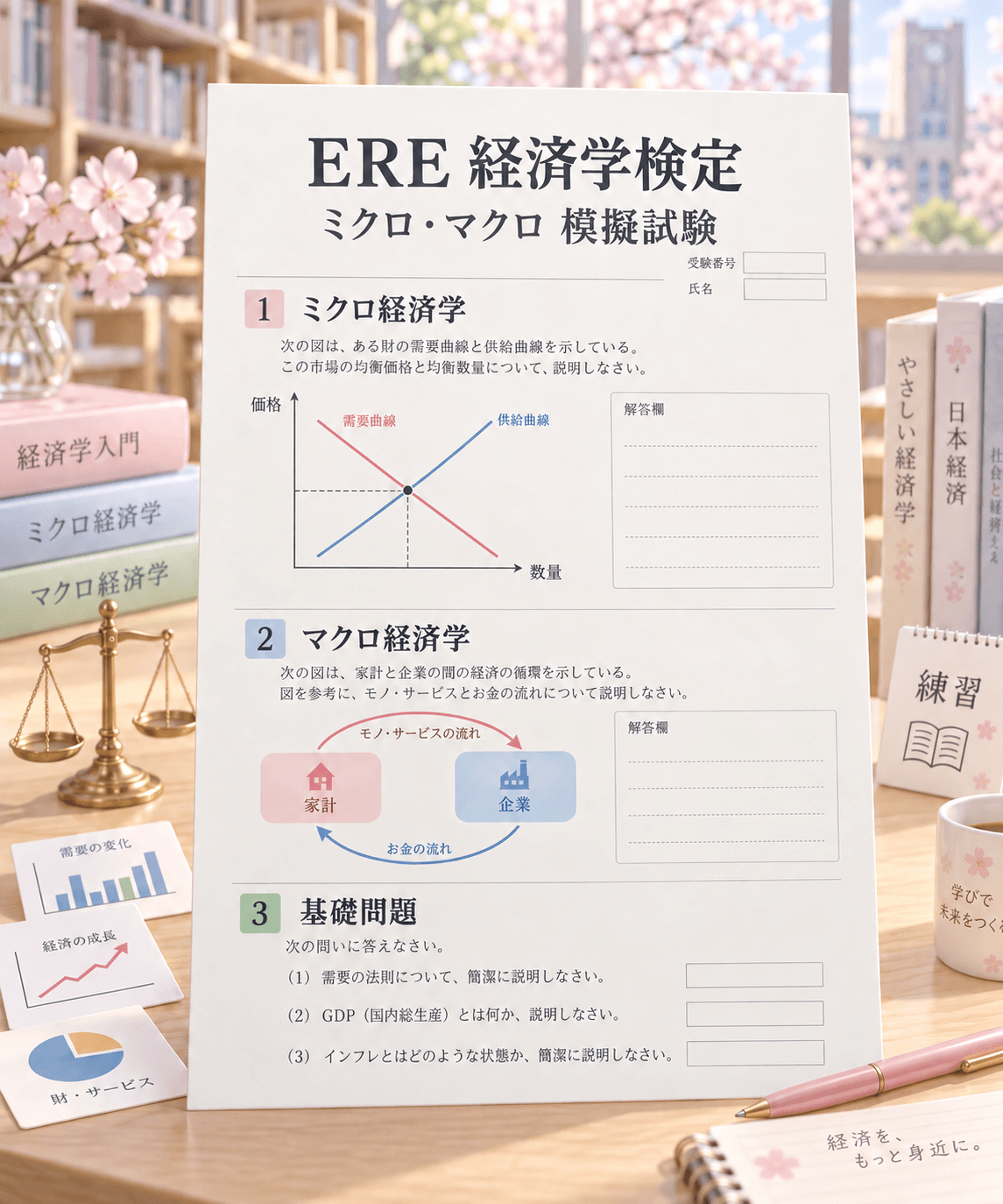
40 original mock forms for the standard ERE Micro/Macro scope: 50 four-choice questions per form, 25 micro and 25 macro, with a 90-minute limit.
Public price · $9.90
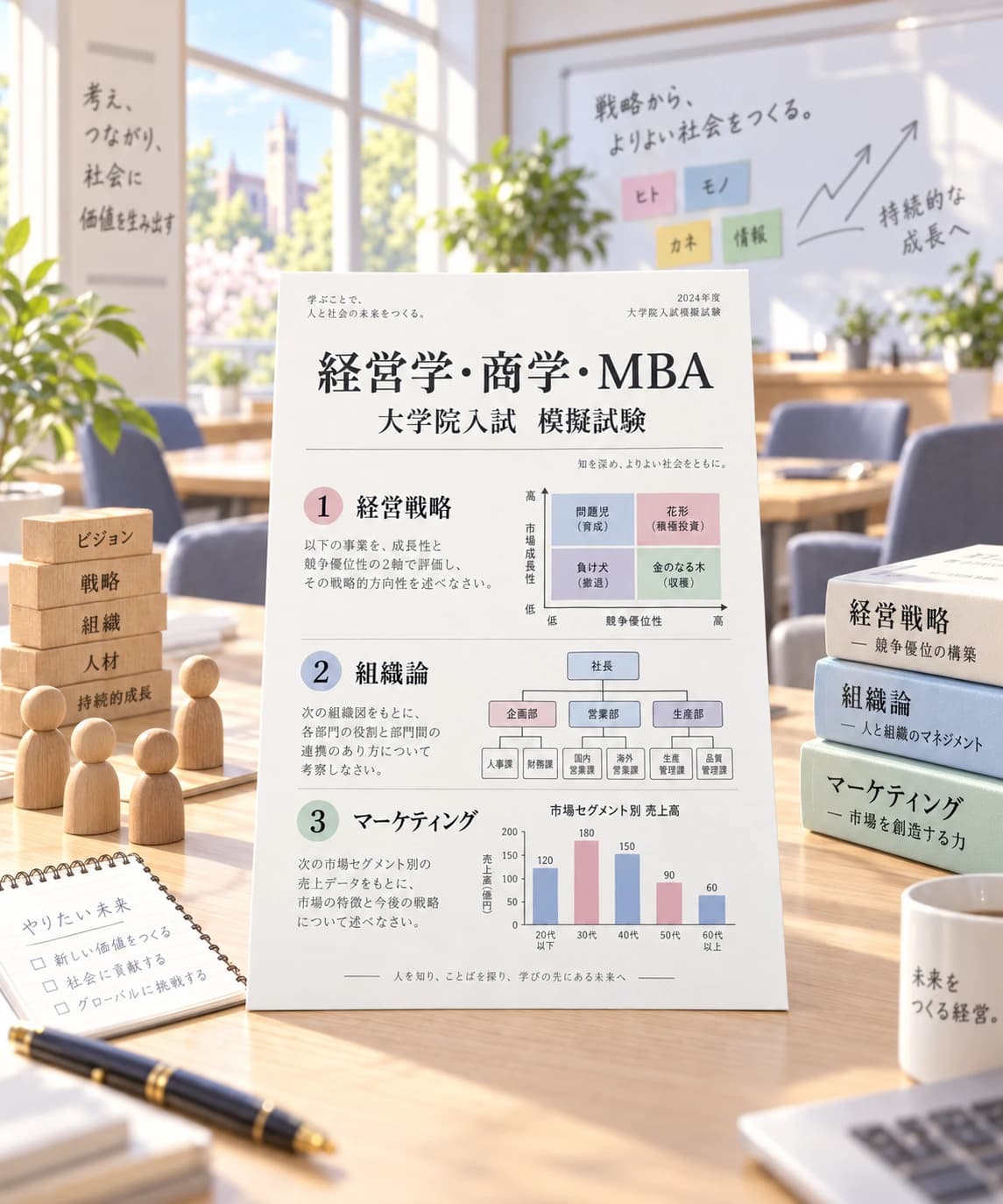
Cover business, commerce, and MBA subjects, with a focus on management, accounting and finance, strategy, and operations.
Public price · $24.90
Cover chemistry and life sciences, with a focus on molecular and cellular science, chemical reaction mechanisms, ecology, and agricultural and food sciences.
Public price · $24.90
Cover civil engineering, architecture, and the environment, with a focus on structures, geotechnics, water, buildings, and urban planning.
Public price · $24.90
Cover information studies and computer science, with a focus on algorithms, systems, networks and databases, AI, and data science.
Public price · $24.90
Cover economics and management engineering, with a focus on microeconomics, macroeconomics, econometrics, and quantitative modeling.
Public price · $24.90
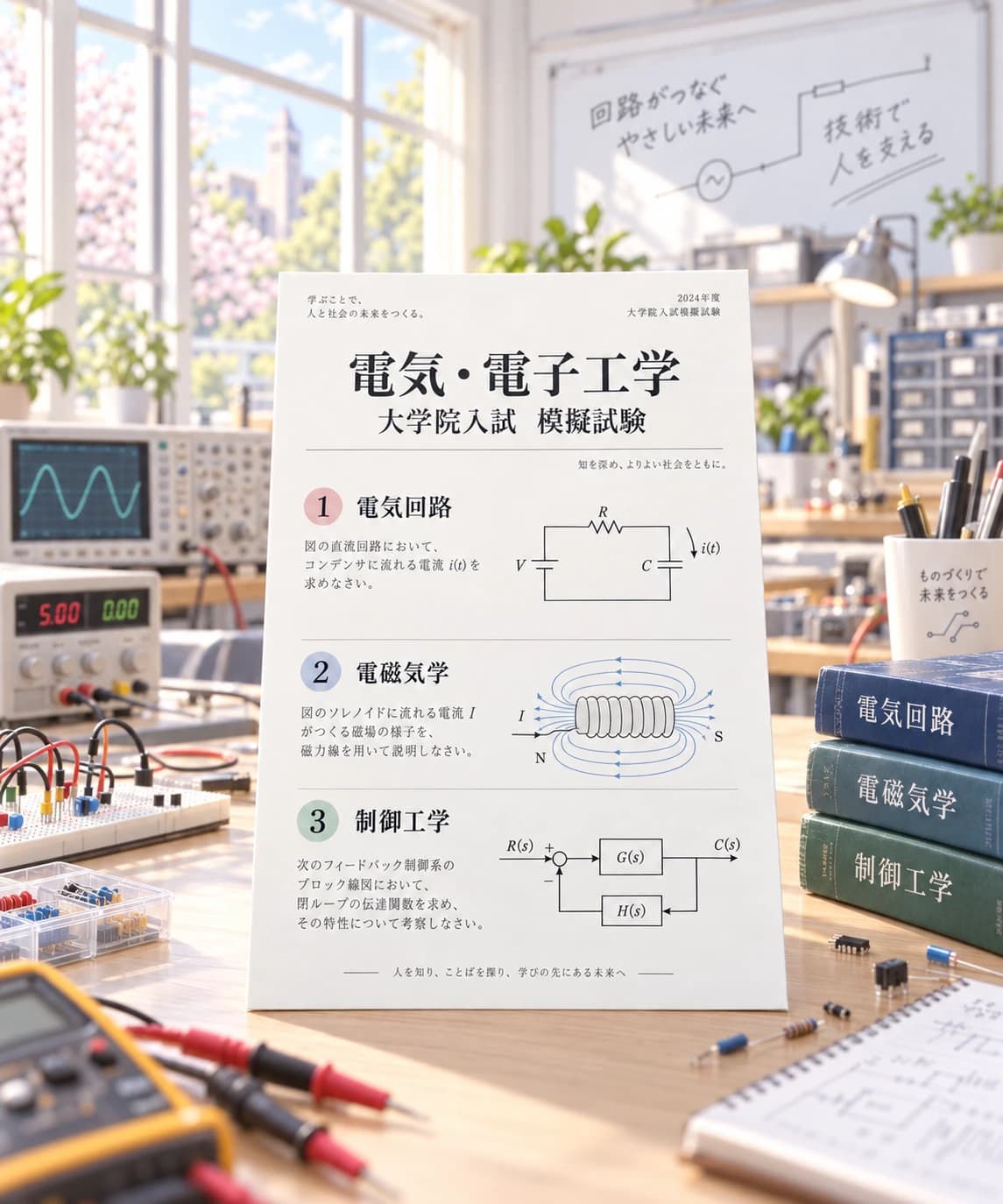
Cover electrical and electronic engineering, with a focus on circuits and power, fields, devices, signals and communications, and control.
Public price · $24.90
Cover education, linguistics, and psychology, with a focus on learning theory, linguistics, psychology, and academic writing.
Public price · $24.90
Cover mathematics and physics, with a focus on algebra and analysis, differential equations, probability and statistics, and physical modeling.
Public price · $24.90
Cover mechanical engineering, with a focus on solids and materials, dynamics and vibration, thermal fluids, design and manufacturing, and control.
Public price · $24.90
Cover sociology, law, and public policy, with a focus on institutions, social research, research methods, and argument.
Public price · $24.90

The Data Scientist Test (Literacy Level) is the entry level of the certification, for practitioners starting to make business decisions with data.
Public price · $14.90

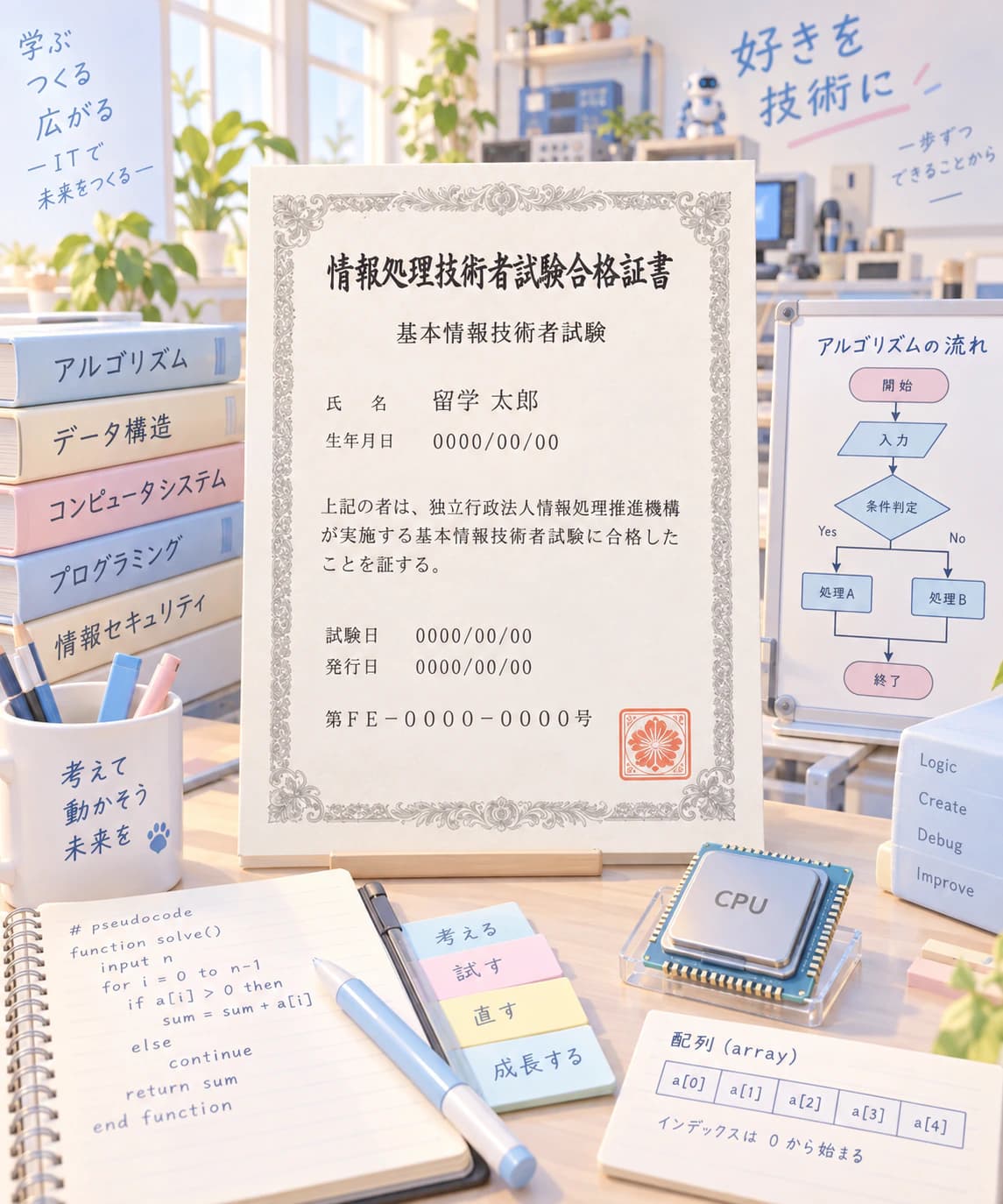
Fundamental IT Engineer is Japan's entry-level national exam for IT engineers: Section A covers fundamentals, Section B algorithms and pseudocode.
Public price · $9.90
FP Skills Test Grade 2 is the intermediate level of the same national certification, testing cross-domain asset-design proposals under eligibility rules.
Public price · $9.90
FP Skills Test Grade 3 is the entry level of Japan's national financial-planning certification, covering life planning, risk, assets, tax, property, and inheritance.
Public price · $9.90

The G Test is a generalist certification for people who apply AI in business, covering deep-learning principles, applications, and legal and ethical topics.
Public price · $14.90

GH-300 is GitHub's official Copilot certification, covering features and plans, data and architecture, prompt engineering, and responsible AI use.
Public price · $14.90

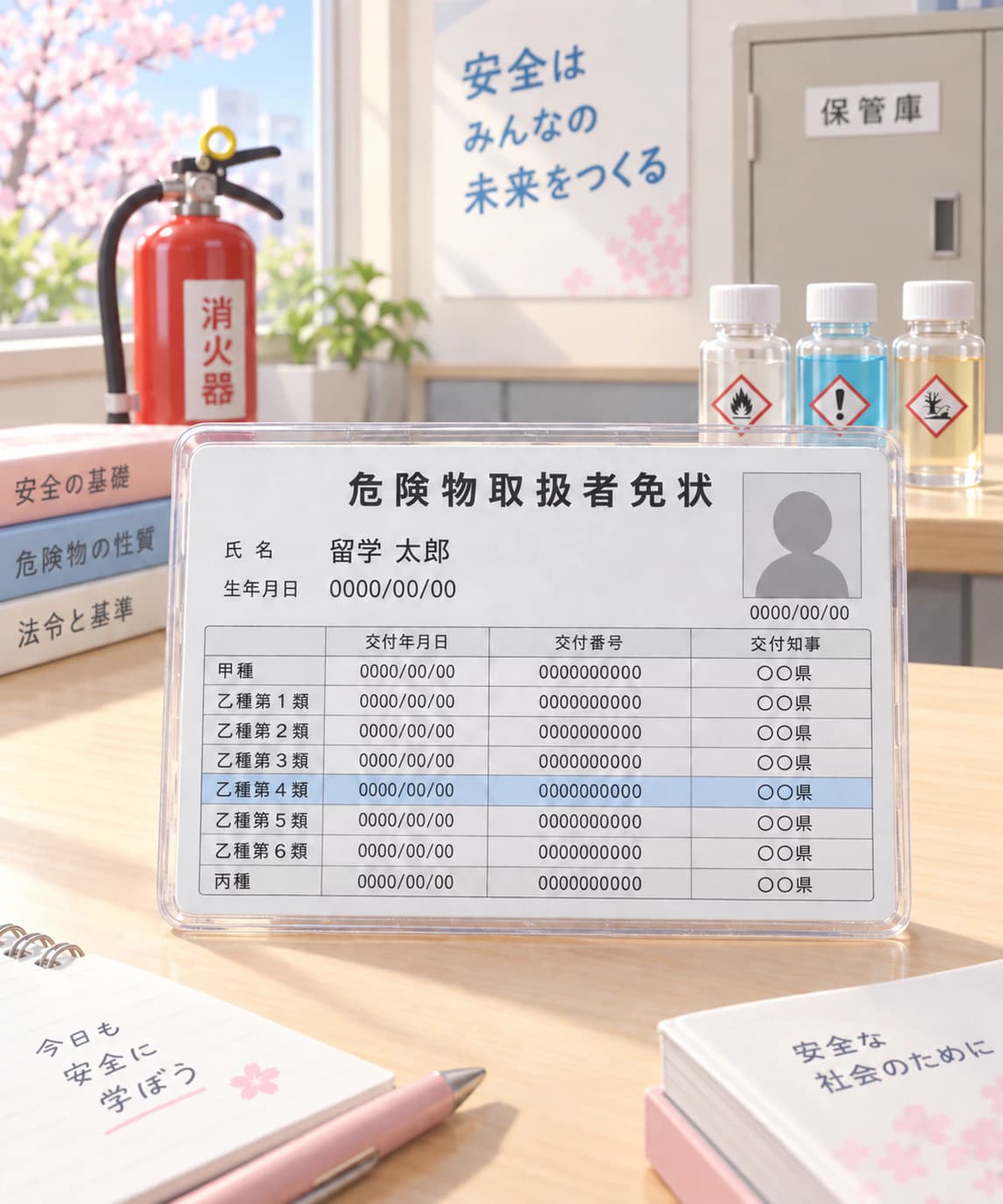
Hazardous Materials Handler Class B Group 4 is a national qualification for handling flammable liquids such as petrol, for filling-station and plant staff.
Public price · $9.90
IT Passport is a Japanese national exam for every job role, testing basic IT knowledge across strategy, management, and technology.
Public price · $9.90

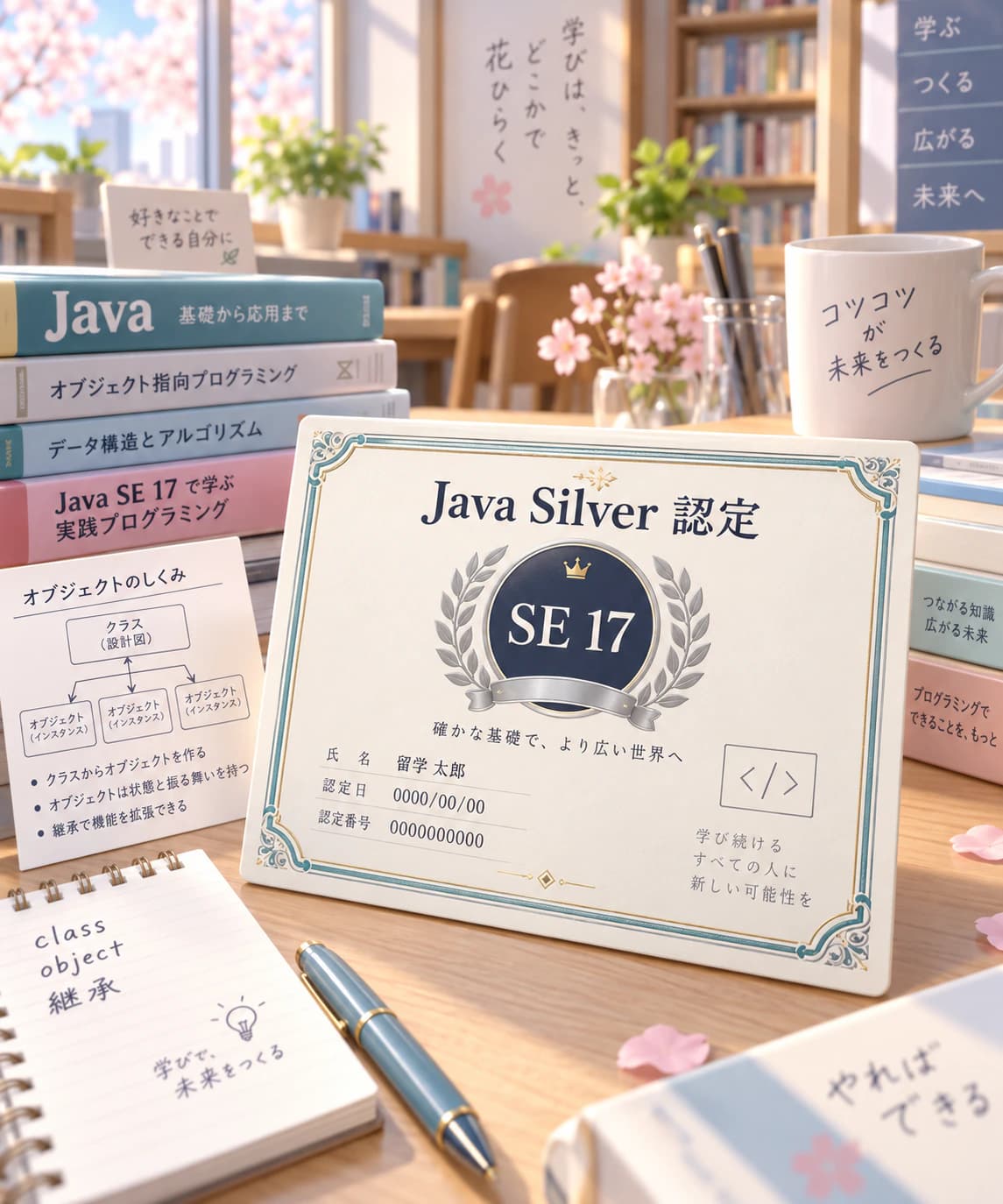
Java Silver SE 17 (1Z0-825-JPN) is Oracle's entry-level Java certification, testing basic use of the language and standard library.
Public price · $14.90
The theory test is the written stage of obtaining a Japanese driver's license, covering traffic rules, signs, and safe-driving judgment.
FREE

Nissho Bookkeeping Grade 2 is the intermediate level of the JCCI bookkeeping certification, adding industrial bookkeeping and cost accounting.
Public price · $9.90
Nissho Bookkeeping Grade 3 is the entry level of the JCCI bookkeeping certification, covering journal entries, ledgers, and closing in commercial bookkeeping.
Public price · $9.90
Information Security Management is a Japanese national exam for departmental security leads: Section A covers knowledge, Section B case response.
Public price · $9.90

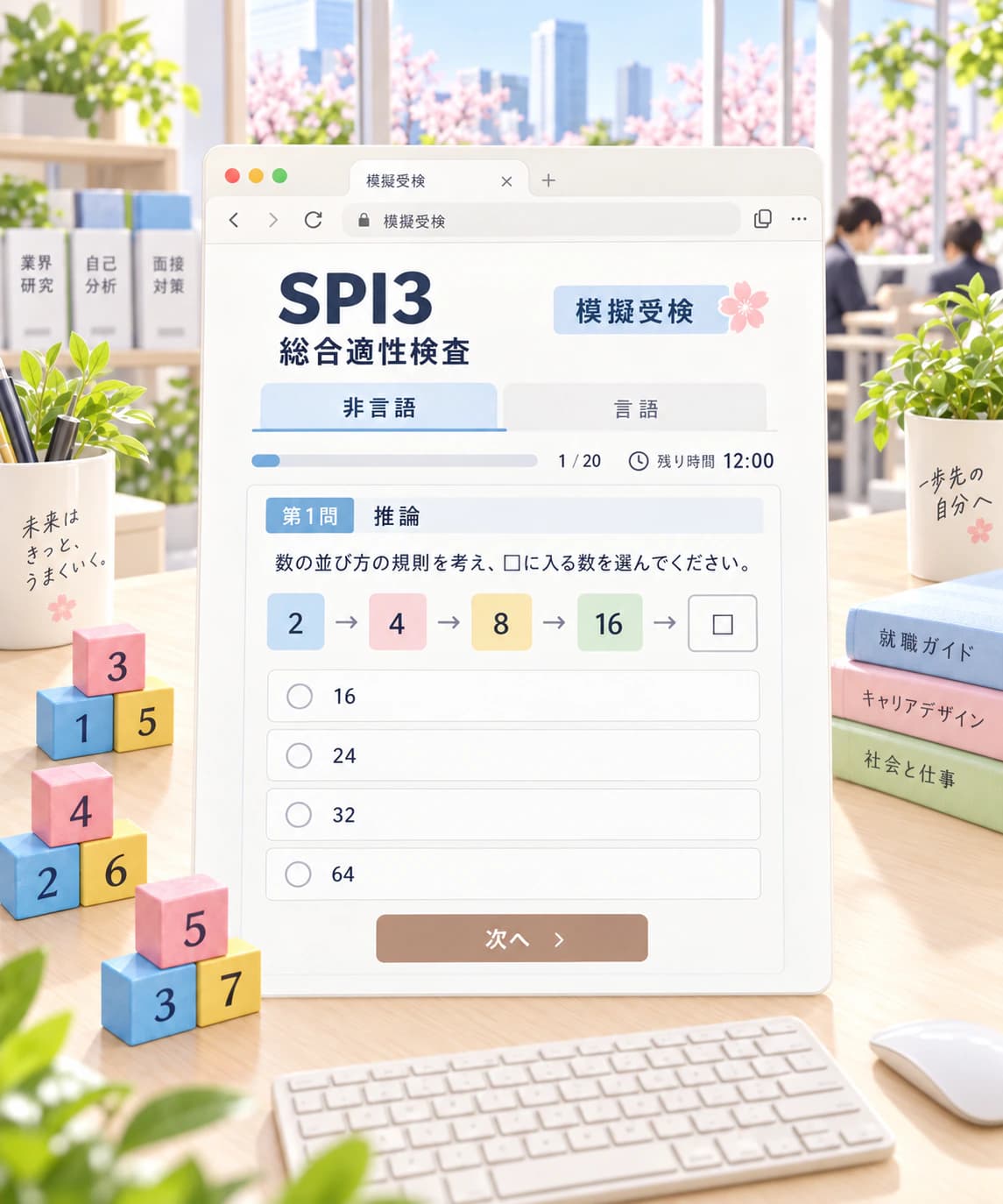
SPI is an aptitude test used in Japanese hiring screens, taken by new graduates and career changers.
FREE
The Japan Statistical Society Certificate Grade 2 assesses statistical knowledge and problem-solving at the level of introductory university courses.
Public price · $9.90

The Real Estate Transaction Specialist exam is a Japanese national qualification covering rights, the Brokerage Act, statutory restrictions, and tax.
Public price · $9.90

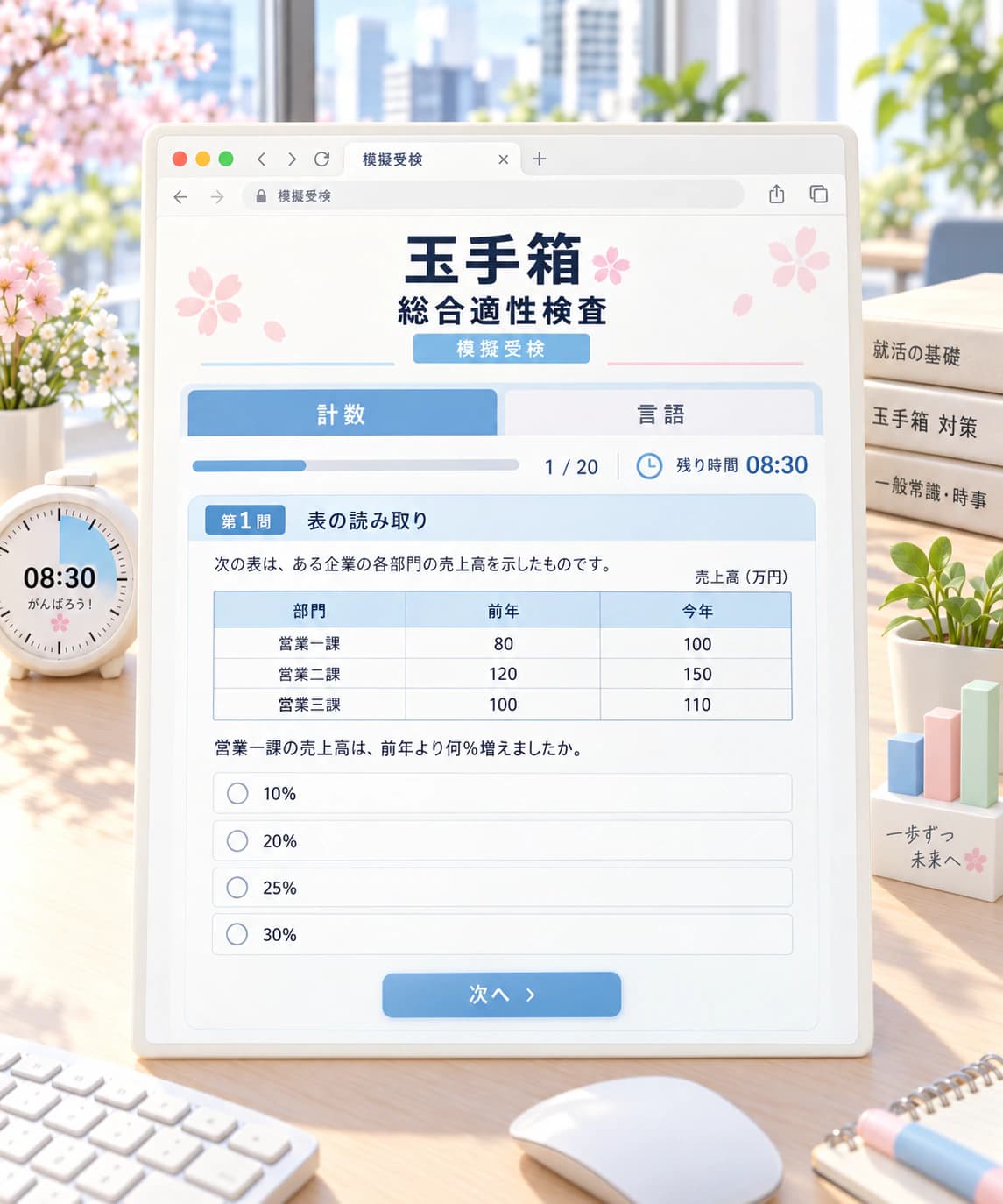
Tamatebako is a web-based aptitude test used in Japanese hiring screens, taken by students and working applicants.
FREE
PREP WITH A PLAN
Link practice, review, and mock exams to see what is settled and where a little more time will help.
Choose an exam to beginPractice a section and note what feels steady and what does not. Start with the weaker areas next time.
Use Chinese or bilingual support to understand questions and explanations. Switch to Japanese when you are ready to practice exam wording.
Missed questions stay saved. Revisit them when it is time to review and check whether you can answer on your own.
Choose a timed mock exam to practice pacing. Review the results afterward and plan the next round.